

The black box excuse
The black box excuse has an expiry date.
The EU AI Act's high risk obligations are enforceable from 2 August 2026, and 78% of organisations have not taken meaningful steps towards compliance. The favourite defence, that AI cannot be fully audited because the model is a black box, is the one argument the Act refuses to accept.
The model is the only part of your AI system that gets to be a black box. The law now demands proof of everything around it.

Your AI governance framework loses to one sentence
92% of engineering teams are confident their AI-generated code is production-ready. 81% have watched production issues climb once it shipped.
The gap is a missing law. No capability without a standard, every power an AI agent holds arrives with a machine-checkable rule attached, in the same commit.
The teams that ship AI safely will be the ones where every new power arrives with its rulebook. Everyone else is running an experiment and calling it a rollout.

Making smarter content decisions in an AI search world.
Most regulated SaaS businesses have a content library and no clear picture of what is working. In an AI search environment, that uncertainty has a commercial cost. Here is how to audit what you have, make smarter decisions about what stays, and build a content strategy that earns real authority.

Seven bugs in sixteen hours, or why AI pilots fail
An AI pilot that sails through its first real run is lying to you.
95% of generative AI pilots deliver no measurable return according to MIT. An agentic development pilot we built found seven bugs in its first sixteen hours, surely it should be binned, but no.
The difference isn't a clean first run. It's whether the failures were visible enough to fix.

Your people data already knows if you're AI-ready
The readiness signal you're paying to discover is sitting in how your people already work. Read it properly, and most maturity scorecards start to look like theatre.
Why AI strategy needs optimism, but must be built on evidence
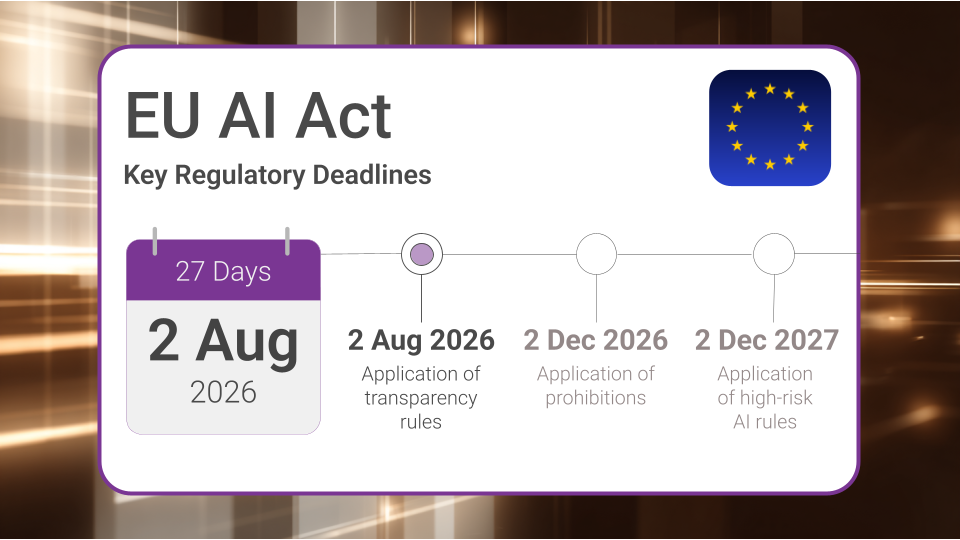
With 27 days until the EU AI Act becomes applicable, regulated SaaS businesses need more than AI optimism. Optimism gets teams moving, but evidence gives leaders control. The next phase of AI strategy must show where AI is being used, where it is creating value, where it is increasing risk, and what needs to happen next.

The Governance Evidence Every Board Should Demand Before August
AI adoption is now visible across regulated SaaS businesses, but the evidence behind it is harder to see. People use AI to move faster, yet leaders must understand where it creates value or risk. The EU AI Act transparency rules hit this August. If you cannot produce verified risk logs and human oversight controls, you don't have a framework. You have a slide deck.

Are your buyers finding you in AI search?
Ask most regulated SaaS leaders whether buyers find them on Google, and they have an answer. Ask about AI search, and the room goes quiet. Most businesses are guessing about their AI search visibility, not measuring it. Here is what a real discoverability audit looks like, and why the answer matters more than you think.

Is your AI generated content weakening trust?
We tried AI-generated imagery on a recent project and the results were good. Really good. Then we started asking questions we probably should have asked sooner, and ended up scrapping the whole lot. It was the right call. If you're reaching for AI to fill a content gap, the output might look fine. But the questions behind it matter just as much.

Diagnose
Get immediate clarity on AI risk and stalled value creation
Our continuous, evidence-based scorecard shows where AI is exposing your organisation to risk, why value is falling short, and what to stop, fix, or scale.

Screenshots from the 25-page personalised report we create as part of the AI Risk & Value Scorecard.

Research Report
The urgent challenges facing regulated SaaS as AI scrutiny grows
Regulated SaaS must build AI that proves value, reduces risk, strengthens control, and earns trust across products, teams, and governance.